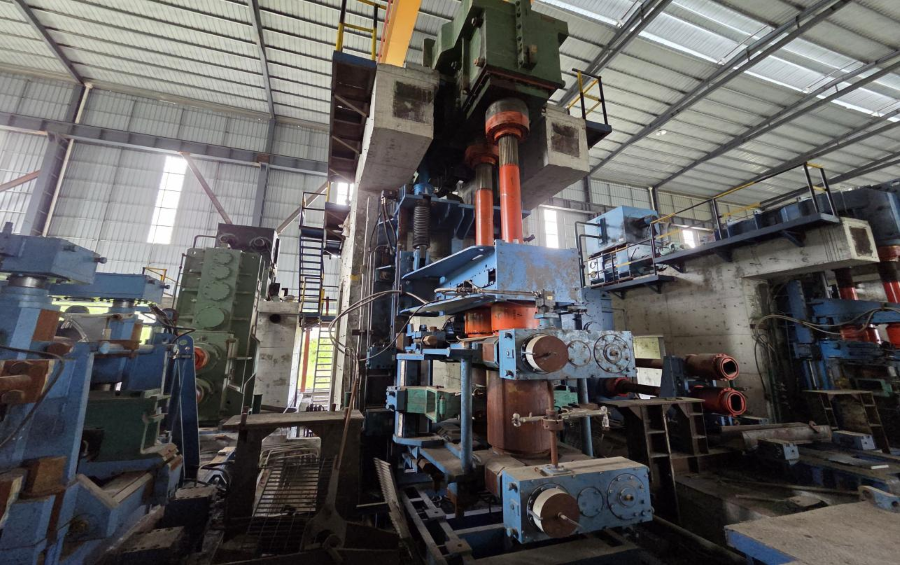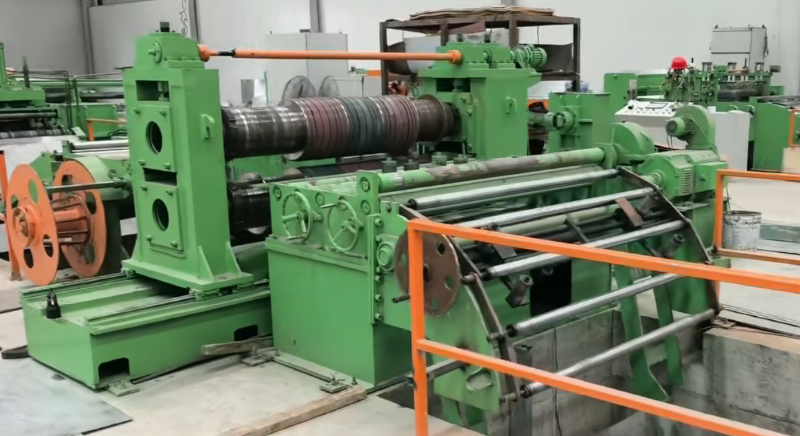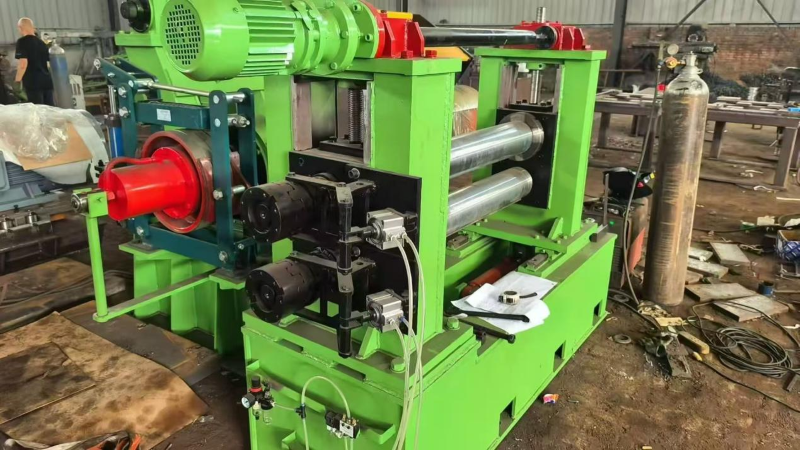
How Can Aging Cold Rolling Mills Regain Their Value? Modernization Becomes an Important Option

As the global steel industry moves toward higher-quality, higher-precision and more efficient production, cold rolling mills are facing increasingly demanding requirements. For equipment that has been operating for many years or even decades, aging does not necessarily mean that the entire mill needs to be replaced.
If the mill housing, mechanical structure and other core components remain in good condition, targeted modernization can upgrade the existing equipment and enable it to continue meeting current production requirements.
As a result, the combination of existing equipment and modern technology is becoming an increasingly practical approach for extending equipment life and controlling investment costs.
1. Cold Rolling Mills Have Long Operating Lifecycles
Cold rolling mills are large-scale industrial assets that require significant investment and are normally designed for long-term operation.
Primetals Technologies notes in its cold rolling technology materials that cold rolling equipment can have a service life of several decades. Modernizing existing equipment can therefore help steel producers maintain competitiveness and adapt their production lines to new products and market requirements.
With growing demand for high-strength steel, high-precision strip and high-surface-quality products, some aging cold rolling mills can improve their capabilities through targeted upgrades while retaining their existing mechanical foundations.
This makes modernization an important part of cold rolling mill lifecycle management.
2. Mechanical Refurbishment Is the Foundation of Modernization
For a cold rolling mill that has been operating for an extended period, a comprehensive mechanical inspection is normally the first step.
Key components include:
- Mill housings
- Work rolls
- Backup rolls
- Roll chocks
- Roll bearings
- Gearboxes and transmission systems
- Uncoilers
- Recoilers
- Tension devices
- Hydraulic systems
Worn components can be repaired, refurbished or replaced depending on their condition.
Used equipment markets have already shown examples of refurbished 4-Hi cold rolling mills in which the mill body, recoilers, gearboxes, roll chocks and rolls have been inspected or rebuilt, together with upgrades to electrical and hydraulic systems.
This demonstrates that the value of an aging cold rolling mill depends not only on its operating age, but also on the condition of its core mechanical systems and the quality of its refurbishment.
3. Electrical Control Upgrades Are a Major Part of Modernization
In many older cold rolling mills, the mechanical equipment may still have considerable remaining service life, while the original electrical control system has become outdated.
Older PLCs, DC drives and electrical components may face problems such as:
- Difficulties obtaining spare parts
- Increasing maintenance costs
- Limited control accuracy
- Poor compatibility with modern automation systems
For this reason, electrical modernization is often one of the most important parts of a cold rolling mill upgrade.
Depending on the project, upgrades may include:
- PLC control systems
- HMI systems
- Main drive systems
- Variable-frequency drives
- Motors
- AGC systems
- Tension control systems
- Sensors
- Electrical control cabinets
- Industrial communication networks
By modernizing these systems while retaining suitable mechanical equipment, manufacturers can improve automation, reliability and operational control without replacing the entire mill.
4. AGC Upgrades Can Improve Strip Thickness Accuracy
For cold rolling mills, thickness control is a critical production requirement.
As customers demand tighter strip tolerances and better product consistency, the original gauge-control systems of older mills may no longer provide sufficient performance.
Modernization can include upgrades to Automatic Gauge Control (AGC), hydraulic screwdown systems and related measurement equipment.
Modern sensors, controllers and data-acquisition systems can also be integrated with existing mechanical equipment to improve process automation.
Therefore, modernization is not simply a matter of replacing an old electrical cabinet. It can involve the integrated control of rolling force, roll gap, speed, tension and strip thickness.
5. Main Drive Upgrades Can Deliver Additional Benefits
The main drive is one of the most important power systems in a cold rolling mill.
After many years of operation, DC motors, DC drives and related electrical components may become increasingly difficult and expensive to maintain.
ABB has published a practical example involving the modernization of a rolling mill at Kanthal in Sweden. The original DC motor and drive system had been operating for nearly 70 years. The modernization included new AC drives, a new motor, transformer, control system and gearbox.
According to ABB, the modernization improved equipment reliability, uptime and productivity while reducing maintenance costs and energy consumption. Total harmonic distortion was also reduced from approximately 30% to 3–4%.
The project demonstrates that modernization can address not only equipment aging, but also energy efficiency, power quality and production stability.
6. Roll Systems Also Require Attention
Cold mill rolls have a direct impact on strip surface quality and rolling accuracy.
During the modernization of an older cold rolling mill, the condition of the work rolls and backup rolls should therefore be carefully evaluated.
Important inspection parameters include:
- Roll diameter
- Surface wear
- Roundness
- Cylindricity
- Roll profile
- Surface roughness
- Surface defects
Rolls that remain suitable for use can be re-ground and refurbished, while rolls that have reached the end of their service life may need to be replaced.
Modern roll grinders and surface inspection technologies can also be incorporated into mill modernization programs, helping improve roll quality and production stability.
7. Why Modernize Instead of Buying a New Cold Rolling Mill?
One of the major advantages of modernization is the ability to reuse the existing equipment base.
If the original mill housing, mechanical structure and foundation remain in good condition, a steel producer may not need to completely dismantle the existing mill and build a new production line.
A modernization project can be implemented in stages:
Mechanical inspection → Critical component refurbishment → Motor and drive upgrades → PLC modernization → AGC upgrade → Hydraulic system upgrade → Commissioning
Companies can also determine the scope of modernization according to their production requirements and investment budget.
For example:
Basic refurbishment:
Focuses on addressing mechanical aging and spare-parts issues.
Electrical modernization:
Focuses on PLCs, drives, control cabinets and operator systems.
Automation modernization:
Further upgrades AGC, tension control and production data systems.
Full modernization:
Integrates mechanical, electrical, hydraulic and automation upgrades.
This flexibility allows modernization projects to be adapted to different investment levels and production objectives.
8. Used Cold Rolling Mills + Modernization Create a New Equipment Model
Modernization is not limited to equipment already owned by a steel producer. The combination of used cold rolling mills, refurbishment and modernization is also becoming an alternative equipment investment model.
International used-equipment markets list different types of used cold rolling mills, including 4-Hi and 20-Hi machines. Some machines are offered after mechanical refurbishment and with upgraded electrical and hydraulic systems.
For companies looking to establish cold rolling capacity while controlling initial capital investment, this model can provide another option.
The process can generally be described as:
Used Equipment Purchase → Inspection → Mechanical Refurbishment → Electrical Upgrade → Automation Modernization → Installation & Commissioning → Production
This means the value of used cold rolling mills is increasingly moving beyond simple second-hand equipment trading toward equipment refurbishment and modernization.
Market Outlook
Modernization is likely to remain an important part of the cold rolling equipment market.
For older mills with sound mechanical foundations, modernization can extend equipment service life while improving performance.
Future modernization projects are likely to focus on:
Electrical Drive Upgrades
Introducing more efficient and reliable AC drives and modern drive technologies.
Automation Upgrades
Modernizing PLC, HMI, AGC and process-control systems.
Energy Efficiency
Reducing energy consumption in main drives and auxiliary equipment.
Roll Technology
Improving product quality through better roll materials, grinding and inspection.
Digital Management
Using real-time data to monitor equipment condition, energy consumption and production efficiency.
Conclusion
Overall, an aging cold rolling mill does not necessarily mean the end of its productive value.
Through mechanical refurbishment, electrical modernization, main drive upgrades, AGC improvements, hydraulic-system renewal and roll optimization, equipment that has been operating for many years can potentially be upgraded to meet modern production requirements.
Existing modernization projects and the used equipment market indicate a growing equipment-utilization model:
Instead of simply replacing aging equipment, manufacturers can use modern technology to restore and improve its production value.
For steel processors, choosing between a new cold rolling mill and modernization of an existing or used mill is not simply a matter of choosing one over the other. Where the existing mechanical foundation is sound and the production requirements are clearly defined, modernization can provide a practical way to extend equipment life, control capital expenditure and improve production efficiency.
Second-Hand Wire Rod Mills Gain Attention as Refurbishment and Equipment Reuse Offer New Investment Options
From “Low-Cost Purchasing” to “Equipment Refurbishment”: The Used Slitting Machine Market Is Changing
Related Article