
5 most common motor load types
author: admin
2022-08-19
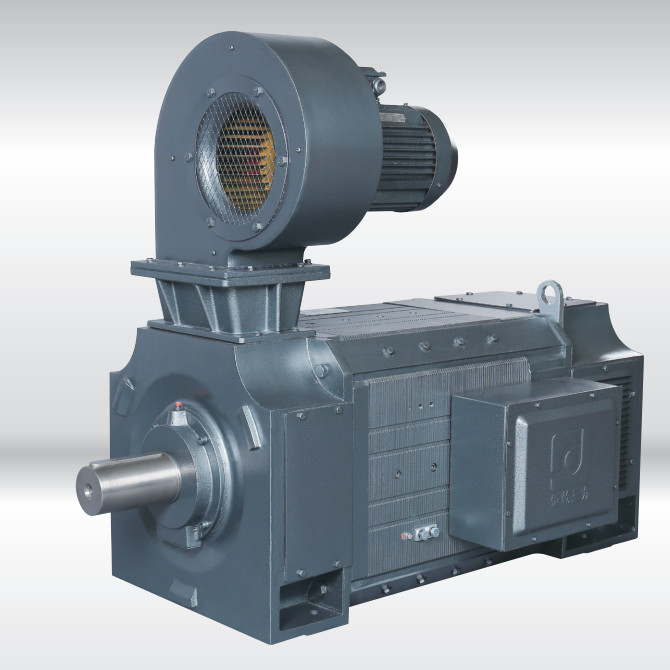
5 most common motor load types
Summary: This article introduces the five most common motor load types.
Keywords: Motor, load profile, constant torque, constant output
Load profile is defined by speed range, torque and power. Certain load types are characteristic in the industrial world. Knowing the load profile (speed range, torque and power) is essential when selecting a suitable motor and variable speed drive for the application.
Some common load types are shown below. There may also be combinations of these types.
1. Constant torque
A constant torque load type is typical when fixed volumes are being handled. For example screw compressors, feeders and conveyors are typical constant torque applications.
Torque is constant and the power is linearly proportional to the speed.
2. Quadratic torque
Quadratic torque is the most common load type. Typical applications are centrifugal pumps and fans. The torque is quadratically, and the power is cubically proportional to the speed.
3. Constant power
A constant power load is normal when material is being rolled and the diameter changes during rolling. The power is constant and the torque is inversely proportional to the speed.
4. Constant power/torque
This load type is common in the paper industry. It is a combination of constant power and constant torque load types. This load type is often a consequence of dimensioning the system according to the need for certain power at high speed.
5. Starting/breakaway torque demand
In some applications high torque at low frequencies is needed. This has to be considered in dimensioning. Typical applications for this load type are for example extruders and screw pumps.
There are also several other load types. They are however hard to describe in a general presentation. Just to mention a few, there are different symmetrical (rollers, cranes, etc.) and unsymmetrical loads. Symmetry/non-symmetry in torque can be for example as a function of angle or time. These kinds of load types must be dimensioned carefully taking into account the overload ability margins of the motor and the variable speed drive, as well as the average torque of the motor.
Summary: This article introduces the five most common motor load types.
Keywords: Motor, load profile, constant torque, constant output
Load profile is defined by speed range, torque and power. Certain load types are characteristic in the industrial world. Knowing the load profile (speed range, torque and power) is essential when selecting a suitable motor and variable speed drive for the application.
Some common load types are shown below. There may also be combinations of these types.
- Constant torque
- Quadratic torque
- Constant power
- Constant power/torque
- Starting/breakaway torque demand
1. Constant torque
A constant torque load type is typical when fixed volumes are being handled. For example screw compressors, feeders and conveyors are typical constant torque applications.
Torque is constant and the power is linearly proportional to the speed.
2. Quadratic torque
Quadratic torque is the most common load type. Typical applications are centrifugal pumps and fans. The torque is quadratically, and the power is cubically proportional to the speed.
3. Constant power
A constant power load is normal when material is being rolled and the diameter changes during rolling. The power is constant and the torque is inversely proportional to the speed.
4. Constant power/torque
This load type is common in the paper industry. It is a combination of constant power and constant torque load types. This load type is often a consequence of dimensioning the system according to the need for certain power at high speed.
5. Starting/breakaway torque demand
In some applications high torque at low frequencies is needed. This has to be considered in dimensioning. Typical applications for this load type are for example extruders and screw pumps.
There are also several other load types. They are however hard to describe in a general presentation. Just to mention a few, there are different symmetrical (rollers, cranes, etc.) and unsymmetrical loads. Symmetry/non-symmetry in torque can be for example as a function of angle or time. These kinds of load types must be dimensioned carefully taking into account the overload ability margins of the motor and the variable speed drive, as well as the average torque of the motor.
Influence and characteristics of inverter on motor
Dalian Kangfeng Technology Co., Ltd. exports Swedish copper extrusion equipment
Related Article

Global steel demand is expected to stabilize in 2026 and recover in 2027, creating potential investment opportunities for used rolling mills and second-hand steel production lines.
Global Steel Demand Stabilizes in 2026: What Opportunities Lie Ahead for Used Steel Equipment?
The continued availability of used wire rod mills and refurbished steelmaking equipment is creating an alternative pathway for producers seeking to expand or restore production capacity, with mechanical refurbishment, electrical upgrades and automation modernization becoming important parts of equipment reuse.
Second-Hand Wire Rod Mills Gain Attention as Refurbishment and Equipment Reuse Offer New Investment Options

As steel producers focus increasingly on equipment investment, production efficiency and lifecycle costs, aging cold rolling mills can regain their competitiveness through mechanical refurbishment, electrical and automation upgrades, and replacement of critical components, making modernization an increasingly attractive option.
How Can Aging Cold Rolling Mills Regain Their Value? Modernization Becomes an Important Option
As steel processors place greater emphasis on investment costs, delivery times and production flexibility, the used slitting machine market is gradually shifting from simple low-cost equipment trading toward professional inspection, refurbishment, electrical control upgrades and equipment reuse.
From “Low-Cost Purchasing” to “Equipment Refurbishment”: The Used Slitting Machine Market Is Changing