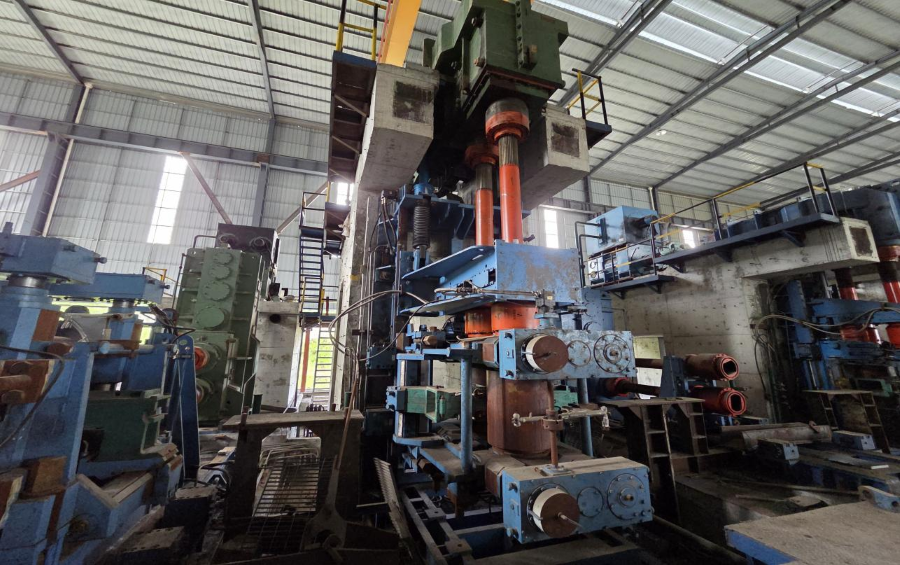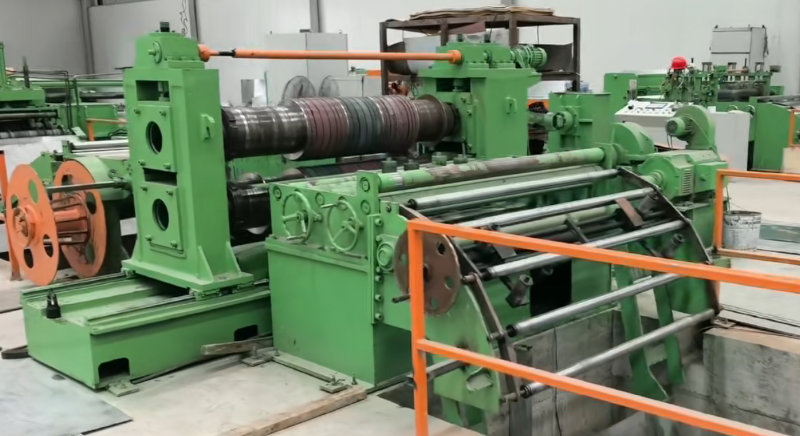
Used Slitting Machine Full-Cycle Technical Services: From Installation & Commissioning to Automation Retrofit
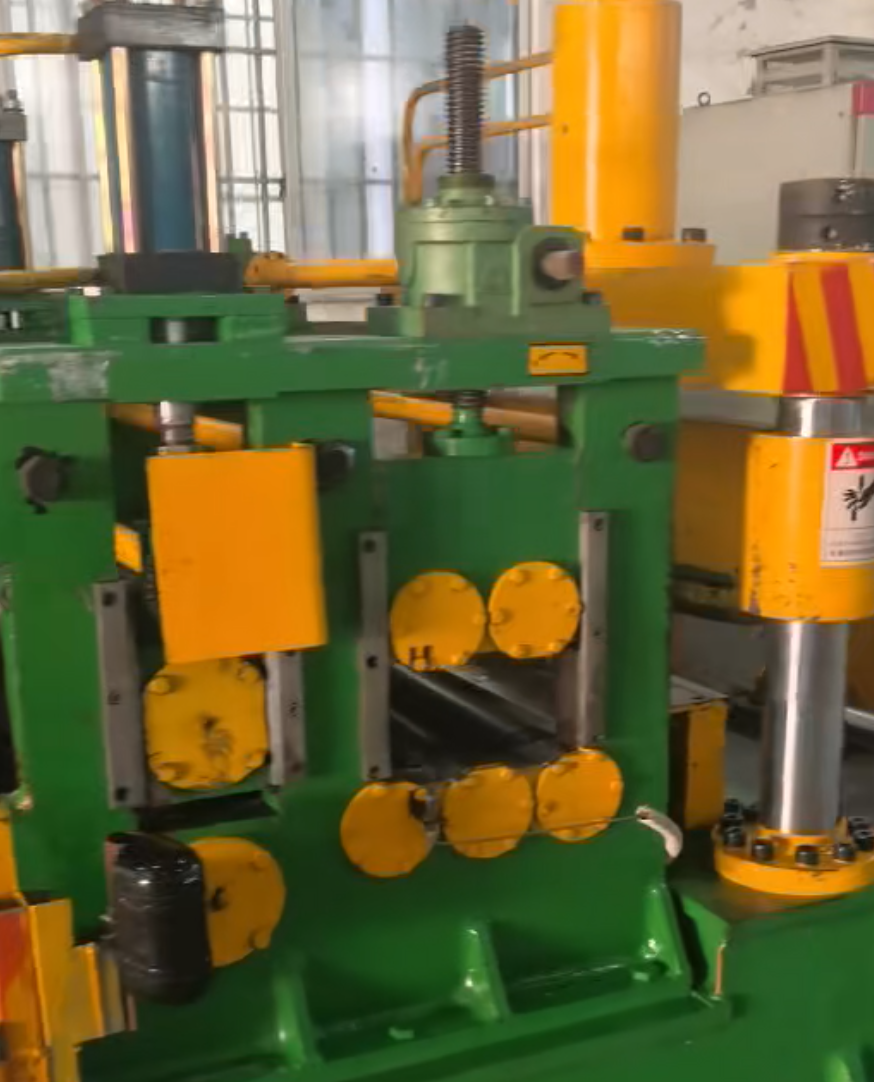
I. The Starting Point: Professional Installation & Commissioning for Rapid Production Start-Up
Unlike new equipment, used machinery requires more meticulous technical evaluation and on-site engineering capability during installation and commissioning. The speed at which a used slitting machine can be restored to its rated performance directly depends on the professionalism of this phase.
A professional installation and commissioning service should encompass the following key steps:
Comprehensive Technical Assessment. Prior to equipment positioning, the technical service team should conduct a thorough inspection of the machine structure, electrical systems, and critical mechanical components to identify potential issues and develop a targeted commissioning plan. This step serves as a "full physical examination" of the equipment, forming the foundation for subsequent stable operation.
Precision Mechanical Calibration. The accuracy of a slitting machine is directly influenced by arbor radial runout (≤0.01mm) and axial parallelism (≤0.02mm/m). During installation, technicians must perform precision calibration on core components including the knife arbors, guide rollers, and unwinding/rewinding units, ensuring all assembly relationships conform to original manufacturer specifications.
Electrical System Integration. Given the potential aging of electrical wiring in used equipment, installation and commissioning should include wiring renewal, PLC control system parameter optimization, and tension control loop debugging to ensure stable tension accuracy and slitting quality at rated speeds.
Trial Operation and Acceptance. Upon completion of installation and basic commissioning, trial production using actual materials must be conducted to verify slitting performance across different speeds and material specifications. The equipment is only delivered after all performance indicators meet the customer's acceptance criteria.
Many industry service providers emphasize a "package installation, commissioning, and training" commitment, ensuring customer operators can independently and proficiently operate the equipment.
II. Continuity: Preventive Maintenance & Technical Support for Long-Term Stable Operation
Post-commissioning maintenance management constitutes the core of full-cycle services for used slitting machines. Unlike the reactive "repair-when-broken" approach, preventive maintenance emphasizes scheduled inspections, predictive maintenance, and failure-risk assessment to eliminate downtime risks before problems occur.
A mature preventive maintenance system typically encompasses the following dimensions:
Regular Inspections and Condition Monitoring. The technical service team conducts on-site inspections according to a planned schedule, focusing on blade wear condition, bearing performance, hydraulic/pneumatic system sealing, and electrical connection safety. Equipment health records are maintained throughout.
Rapid Response and On-Site Service. When equipment abnormalities arise, the service provider's response time and on-site problem-solving capability are critical. Industry-leading providers typically commit to response within 2 hours and on-site arrival within 48 hours, supported by adequate spare parts inventory to minimize repair cycles.
Spare Parts Supply Assurance. The availability of spare parts for used equipment is a key factor affecting downtime. A robust service system should provide original-equivalent quality spare parts covering wear items such as blades, bearings, belts, and sensors, while maintaining safety stock of frequently replaced components.
Operator Training and Knowledge Transfer. The value of technical services lies not only in "fixing the machine" but also in "training the people." Through systematic operational training and safety management guidance, customers' operators gain an in-depth understanding of machine working principles, safety procedures, and daily maintenance practices — fundamentally reducing equipment failure rates caused by improper operation.
III. Upgrade: Automation Retrofit — Giving Used Equipment a Second Life
As manufacturing evolves toward intelligence and automation, traditional used slitting machines often face bottlenecks in control systems, automation levels, and process adaptability. However, this does not mean the equipment must be scrapped. Through targeted automation retrofits, older machinery can be revitalized, delivering near-new performance at a fraction of the cost of new equipment.
Typical automation retrofit directions include:
Control System Modernization. Replacing outdated PLC and HMI systems with next-generation control platforms, optimizing operator interfaces and alarm management, upgrading tension control algorithms for enhanced web handling, and reserving IO-Link or fieldbus interfaces for future data acquisition and smart manufacturing integration.
Mechanical Performance and Process Capability Expansion. Based on changes in customer product portfolios, retrofit services can achieve increased rewind diameter, higher slitting speeds, additional slitting stations, and adaptation to new material specifications (such as different core sizes and web widths). For instance, a leading Taiwanese nonwoven manufacturer retrofitted its used slitter to increase rewind OD from 1200mm to 1500mm and added rewind shaft size adaptability, significantly reducing downtime for roll changes and boosting production capacity.
Safety Compliance Upgrades. As safety regulations evolve globally, used equipment often requires retrofitting with safety devices that meet current standards, including light curtains, emergency stop system renewal, and operator access controls. This not only ensures operator safety but is also a prerequisite for equipment export or entry into specific markets.
Real-World Case: A leading equipment service provider assisted 13 domestic and international customers with over 50 equipment modification projects in 2023, covering electrical control upgrades, mechanical changes, and automation introductions. These retrofits were applied not only to their own brand slitters but also successfully implemented on other brands' used slitting equipment. Post-retrofit production efficiency improvements reached up to 20%, with energy consumption reduced by 15%.
IV. The Value Proposition: Retrofit Instead of Replace — A More Cost-Effective and Sustainable Choice
Under the full-cycle service philosophy, "retrofit instead of replace" is increasingly becoming the rational choice for more enterprises.
Significant Cost Advantage. The purchase price of a used slitting machine is typically 40-60% of that of new equipment, and targeted automation retrofits cost far less than full machine replacement. In comprehensive terms, the total investment through the "purchase + retrofit" model is roughly half that of acquiring a brand-new machine.
Shortened Delivery Lead Time. New equipment delivery often takes months or longer from order placement, whereas retrofit of used equipment can be completed within weeks, enabling customers to respond rapidly to market orders.
Commitment to Sustainability. Extending equipment service life is inherently a green practice — reducing raw material consumption and energy emissions associated with manufacturing new equipment, while minimizing industrial waste generation. As the circular economy gains increasing recognition, choosing used equipment retrofit over replacement is also a tangible expression of corporate social responsibility.
Conclusion
The value of a used slitting machine extends far beyond the initial purchase price advantage. From precise installation and commissioning, to systematic preventive maintenance, to technology-enabled automation retrofits — full-cycle technical services are the key to unlocking the potential of used equipment.
Choosing a partner with comprehensive technical service capabilities means you are not just acquiring a machine; you are gaining a long-term partner capable of providing continuous technical support as your business evolves. Regardless of the brand of your equipment, as long as its mechanical structure remains sound, through professional technical assessment and targeted retrofits, it is fully capable of continuing to create value on your production line.
How to Choose the Right Used Polishing Machine?
Key Factors to Consider Before Buying a Used Hot Rolling Mill
Related Article