

Influence and characteristics of inverter on motor
author: gavin
2022-08-26
Influence and characteristics of inverter on motor
This article introduces the influence and characteristics of the frequency converter on the motor.
1 Ordinary asynchronous motors are designed according to constant frequency and constant voltage, and it is impossible to fully meet the requirements of variable frequency speed regulation.
2 Characteristics of variable frequency motors
Text
1 Ordinary asynchronous motors are designed according to constant frequency and constant voltage, and it is impossible to fully meet the requirements of variable frequency speed regulation.
The following is the influences of the inverter on the motor:
1) The efficiency and temperature rise of the motor
Regardless of the type of frequency converter, different levels of harmonic voltage and current are generated during operation, so that the motor runs under non-sinusoidal voltage and current. According to the introduction, taking the commonly used sine wave PWM inverter as an example, its low-order harmonics are basically zero, and the remaining high-order harmonic components about twice the carrier frequency are: 2u+1(u is the modulation ratio).
High-order harmonics will increase the stator copper loss, rotor copper (aluminum) loss, iron loss and additional loss of the motor, the most notable being the rotor copper (aluminum) loss. Because the asynchronous motor rotates at a synchronous speed close to the fundamental frequency, a large rotor loss will be generated after the high-order harmonic voltage cuts the rotor bar with a large slip. In addition to this, additional copper losses due to the skin effect need to be considered. These losses will cause the motor to generate additional heat, reduce the efficiency and reduce the output power. For example, if an ordinary three-phase asynchronous motor is operated under the condition of a non-sinusoidal power supply output by the inverter, its temperature rise will generally increase by 10%--20%.
2) The problem of the insulation strength of the motor
At present, many small and medium-sized inverters use PWM control methods. Its carrier frequency is about several thousand to ten kilohertz, which makes the motor stator windings have to withstand a high voltage rise rate, which is equivalent to applying a steep impulse voltage to the motor, which makes the inter-turn insulation of the motor more resistant. ordeal. In addition, the rectangular chopper impulse voltage generated by the PWM inverter is superimposed on the motor operating voltage, which will pose a threat to the motor's ground insulation, and the ground insulation will accelerate aging under the repeated impact of high voltage.
3) Harmonic electromagnetic noise and vibration
When an ordinary asynchronous motor is powered by a frequency converter, the vibration and noise caused by electromagnetic, mechanical, ventilation and other factors will become more complicated. The time harmonics contained in the variable frequency power supply interfere with the inherent space harmonics of the electromagnetic part of the motor to form various electromagnetic excitation forces. When the frequency of the electromagnetic force wave is consistent with or close to the natural vibration frequency of the motor body, a resonance phenomenon will occur, thereby increasing the noise. Due to the wide operating frequency range of the motor and the wide range of rotational speed variation, it is difficult for the frequencies of various electromagnetic force waves to avoid the natural vibration frequency of each component of the motor.
4) The adaptability of the motor to frequent starting and braking
After the inverter is used for power supply, the motor can be started at a very low frequency and voltage without inrush current, and the various braking methods provided by the inverter can be used for rapid braking, in order to achieve frequent starting and braking The conditions are created, so the mechanical system and electromagnetic system of the motor are under the action of cyclic alternating force, which brings fatigue and accelerated aging problems to the mechanical structure and insulation structure.
5) Cooling problem at low speed
First of all, the impedance of the asynchronous motor is not ideal. When the frequency of the power supply is low, the loss caused by the higher harmonics in the power supply is large. Secondly, when the speed of the ordinary asynchronous motor is reduced again, the cooling air volume decreases in proportion to the cube of the speed, resulting in the deterioration of the low-speed cooling condition of the motor and the sharp increase in temperature rise, making it difficult to achieve constant torque output.
2 Characteristics of variable frequency motors
1) Electromagnetic Design
For ordinary asynchronous motors, the main performance parameters considered in redesign are overload capacity, starting performance, efficiency and power factor. The variable frequency motor, because the critical slip is inversely proportional to the power frequency, can be started directly when the critical slip is close to 1. Therefore, the overload capacity and starting performance do not need to be considered too much, but the key problem to be solved is how to improve the motor pair. Adaptability to non-sinusoidal power supplies. The method is generally as follows:
a Reduce stator and rotor resistance as much as possible. Reducing the stator resistance can reduce the copper loss of the fundamental wave to make up for the increase in copper loss caused by higher harmonics.
b In order to suppress the high-order harmonics in the current, the inductance of the motor needs to be appropriately increased. However, the leakage reactance of the rotor slot is large, the skin effect is also large, and the copper loss of high-order harmonics also increases. Therefore, the size of the leakage reactance of the motor should take into account the rationality of impedance matching in the entire speed regulation range.
c The main magnetic circuit of the variable frequency motor is generally designed to be unsaturated. First, considering that higher harmonics will deepen the magnetic circuit saturation, and second, considering that at low frequencies, in order to increase the output torque, the output voltage of the inverter should be appropriately increased.
2) Structural design
In the structural design, the influence of the non-sinusoidal power supply characteristics on the insulation structure, vibration, noise cooling method, etc. of the variable frequency motor is mainly considered, and the following issues are generally paid attention to:
a Insulation grade, generally F grade or higher, strengthens the ground insulation and the insulation strength of the turns, and especially considers the ability of the insulation to withstand impulse voltage.
b For the vibration and noise of the motor, the rigidity of the motor components and the whole should be fully considered, and the natural frequency should be increased as much as possible to avoid resonance with each force wave.
c Cooling method: Forced ventilation is generally used for cooling, that is, the main motor cooling fan is driven by an independent motor.
d For the constant power variable frequency motor, when the speed exceeds 3000min, special grease with high temperature resistance should be used to compensate for the temperature rise of the bearing.
The variable frequency motor can run for a long time in the range of 0.1HZ--130HZ,
Ordinary motors can run for a long time in the range of 20--65hz with 2 poles.
The 4-pole is for long-term operation in the 25--75hz range.
The 6-pole is for long-term operation in the 30--85hz range.
8 poles for long-term operation in the range of 35--100hz
e measures to prevent shaft current, and bearing insulation measures should be adopted for motors with a capacity exceeding 160KW. The main reason is that it is easy to produce asymmetrical magnetic circuit, and also produces shaft current. When the currents generated by other high-frequency components work together, the shaft current will increase greatly, resulting in bearing damage, so insulation measures are generally taken.
Keywords: AC motor, inverter, asynchronous motor, motor inverter
When Cost Efficiency Meets Reliability: Why Used Machine Are Becoming the New Choice in Metal Processing?
5 most common motor load types
Related Article

Global steel demand is expected to stabilize in 2026 and recover in 2027, creating potential investment opportunities for used rolling mills and second-hand steel production lines.
Global Steel Demand Stabilizes in 2026: What Opportunities Lie Ahead for Used Steel Equipment?
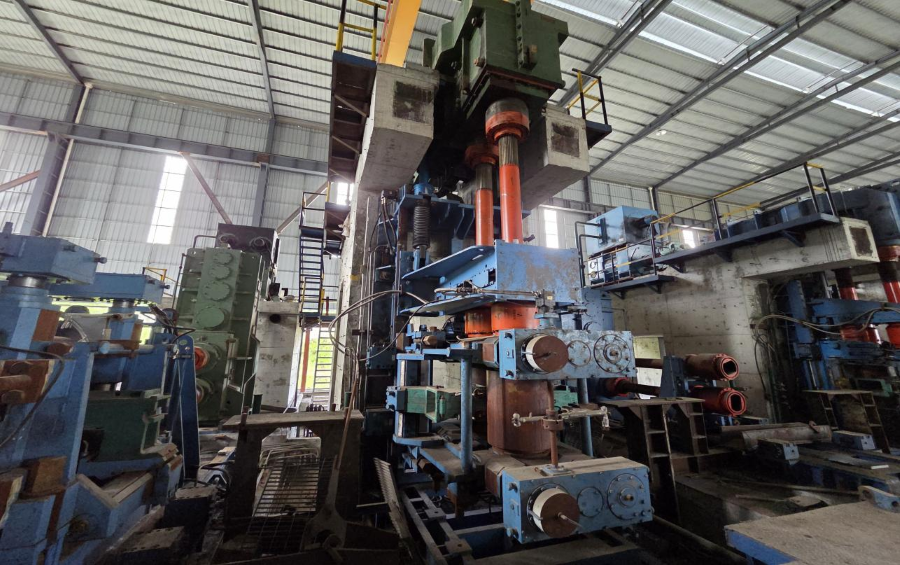
The continued availability of used wire rod mills and refurbished steelmaking equipment is creating an alternative pathway for producers seeking to expand or restore production capacity, with mechanical refurbishment, electrical upgrades and automation modernization becoming important parts of equipment reuse.
Second-Hand Wire Rod Mills Gain Attention as Refurbishment and Equipment Reuse Offer New Investment Options
As steel producers focus increasingly on equipment investment, production efficiency and lifecycle costs, aging cold rolling mills can regain their competitiveness through mechanical refurbishment, electrical and automation upgrades, and replacement of critical components, making modernization an increasingly attractive option.
How Can Aging Cold Rolling Mills Regain Their Value? Modernization Becomes an Important Option
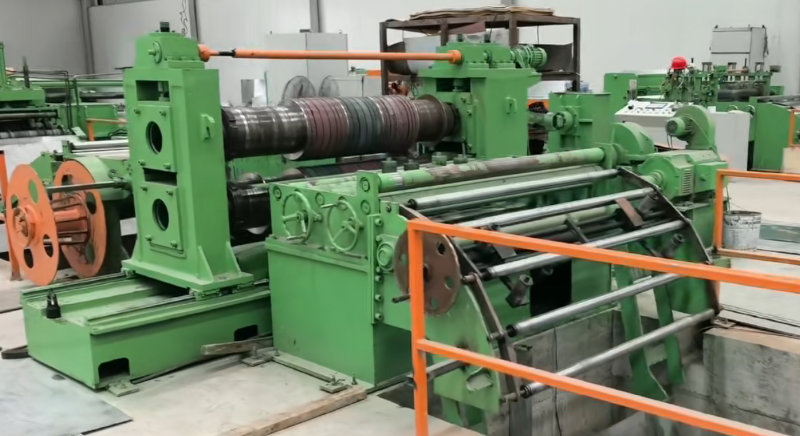
As steel processors place greater emphasis on investment costs, delivery times and production flexibility, the used slitting machine market is gradually shifting from simple low-cost equipment trading toward professional inspection, refurbishment, electrical control upgrades and equipment reuse.
From “Low-Cost Purchasing” to “Equipment Refurbishment”: The Used Slitting Machine Market Is Changing